
Lighting the way toward smarter infrastructure
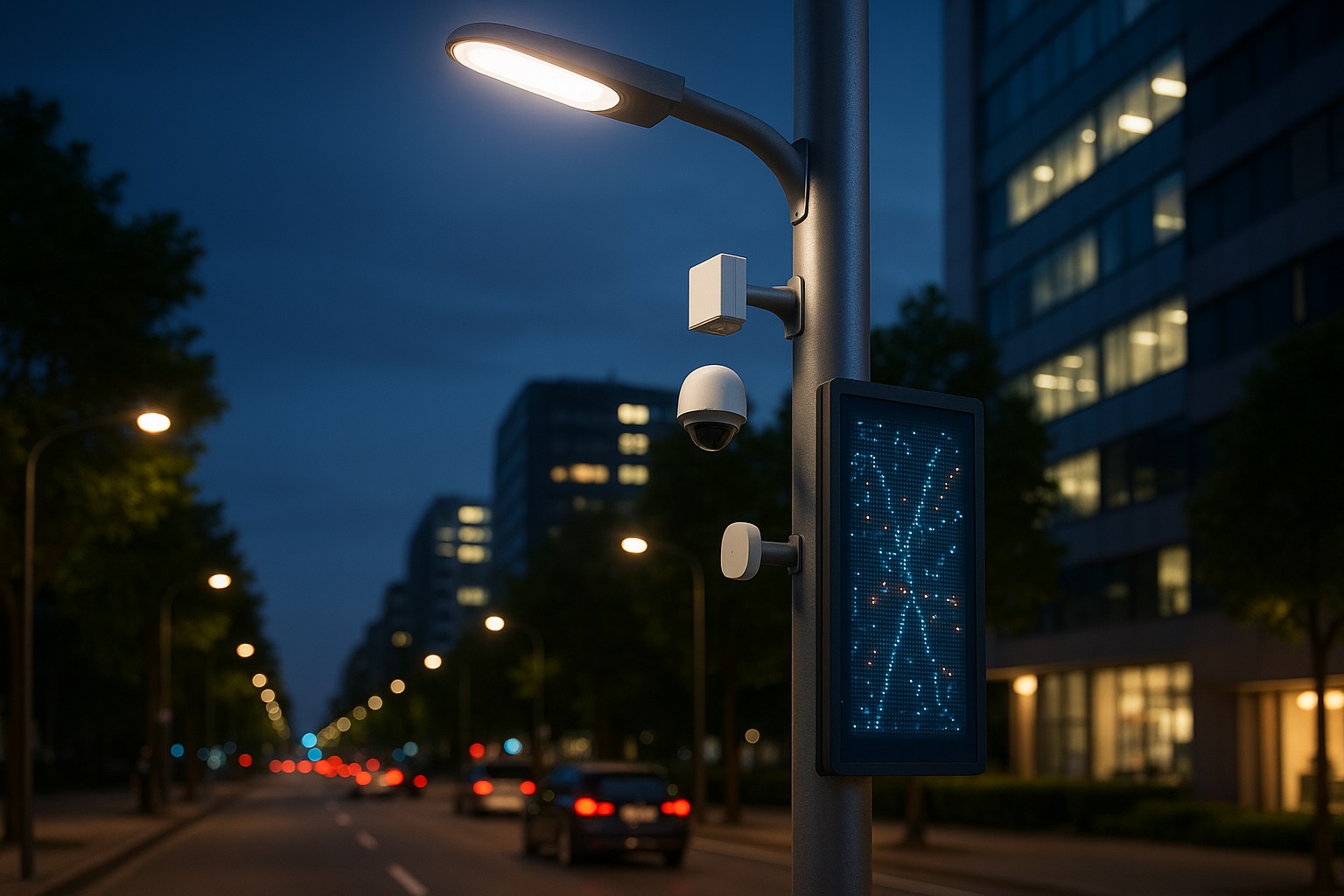
As cities around the world pursue digital transformation, a surprisingly humble object is emerging as a keystone of urban innovation: the streetlight. Redesigned as smart poles, these high-tech fixtures do far more than illuminate roads. Equipped with sensors, cameras, and communication modules, they support a wide range of smart city applications — from environmental monitoring and traffic management to public Wi-Fi and electric vehicle (EV) charging. In doing so, smart poles are transforming existing infrastructure into multifunctional digital hubs that serve both residents and city planners.
Technology embedded in plain sight
The advantage of smart poles lies in their location and ubiquity. Because streetlights already line roads and public spaces, they’re ideal for discreetly hosting technology that supports real-time data collection and urban services. A single pole can track air quality, measure noise levels, detect movement for adaptive lighting, or host small cell antennas for 5G. Others may provide emergency alert systems, pedestrian counters, or digital signage. These integrations reduce clutter, minimize installation costs, and promote more cohesive urban design.
Efficiency, sustainability, and safety
Smart poles offer a triple win for municipalities: operational efficiency, environmental sustainability, and enhanced safety. LED-based adaptive lighting systems, for example, adjust brightness based on movement or ambient light, reducing energy consumption by up to 70%. Sensors can detect accidents or crime-related activity and immediately alert authorities. By centralizing data collection, smart poles also streamline citywide management, enabling faster response to maintenance issues, infrastructure strain, or public safety concerns. For residents, the benefits are tangible — better lighting, faster connectivity, and improved public services.
Scaling challenges and future potential
Despite their promise, the rollout of smart poles must overcome several hurdles, including data privacy, vendor standardization, and upfront costs. Not all city governments have the technical capacity or budget to manage large-scale sensor networks. Additionally, concerns about surveillance and the ethical use of collected data require clear governance and transparency. Still, with public-private partnerships and modular designs, many cities are embracing phased deployments. As smart infrastructure becomes a baseline expectation, smart poles are poised to become as integral to city life as the power grid or water supply.
