
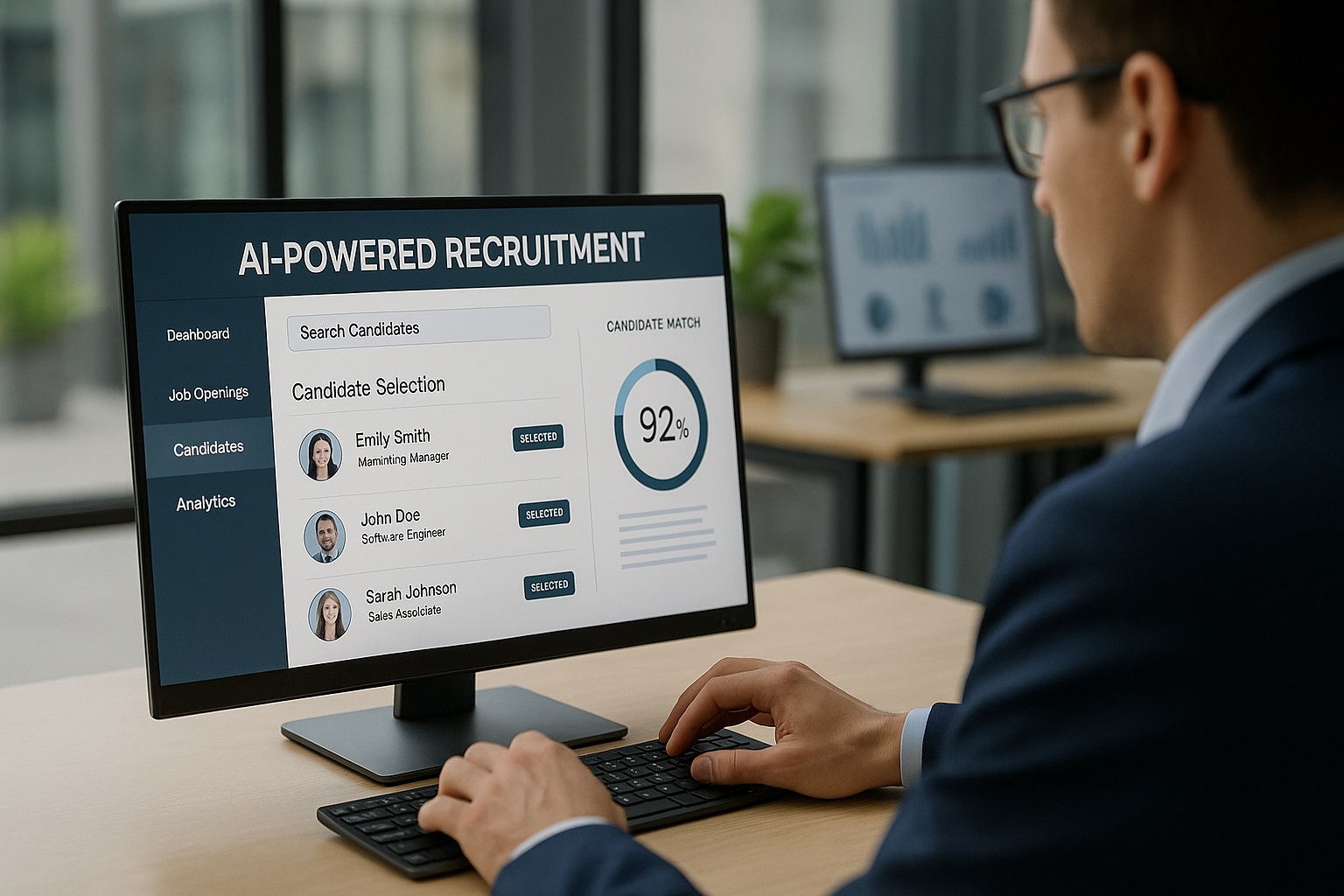
In recent years, artificial intelligence has entered the HR sphere with remarkable speed, particularly in recruitment. From resume screening to video interview analysis, AI tools are increasingly used to streamline hiring decisions and reduce time-to-hire. For companies managing high application volumes, these technologies offer clear advantages: improved efficiency, reduced bias in theory, and significant cost savings. However, as AI becomes more embedded in recruitment pipelines, questions arise around transparency, accountability, and fairness.
How AI transforms talent acquisition
AI-driven recruitment systems use natural language processing, machine learning algorithms, and predictive analytics to identify top candidates based on patterns and past data. Applications are automatically ranked, video interviews can be assessed for tone, language, and facial expressions, and chatbots manage initial contact with applicants. For HR teams, this can translate into thousands of hours saved annually, particularly in large organizations. Yet, these systems do not operate in a vacuum — they reflect the data they are trained on, which can perpetuate historic biases if not carefully curated.
Concerns over fairness and explainability
One of the critical challenges with AI in hiring is the „black box” problem — decisions are made, but the logic behind them isn’t always accessible. Candidates may be rejected without understanding why, and recruiters themselves may not fully grasp how the algorithm weighs various factors. Additionally, if the training data contains biased patterns (such as underrepresentation of certain demographics in leadership roles), the algorithm can unintentionally reinforce inequality. Regulatory frameworks, like the EU’s AI Act, are beginning to address these gaps, requiring more transparency and human oversight in decision-making systems.
Balancing automation with human judgment
The most forward-thinking companies are combining AI’s efficiency with human insight, using algorithms to assist — not replace — recruiters. AI can narrow the field, flag patterns, and automate repetitive tasks, but final decisions still rest with people trained to evaluate nuance and culture fit. Moreover, organizations that invest in bias audits, diverse training data, and candidate experience tools are more likely to build equitable and effective hiring ecosystems. Ultimately, success in AI-powered recruitment comes not from removing humans from the equation, but from empowering them with better tools.
