
How to Donate Furniture to Charity UK Households Genuinely Need
Deciding to donate furniture to charity UK reuse networks can redistribute is one of the most practical ways to clear a house without adding to landfill. Every year British households throw away roughly 670,000 tonnes of furniture, and around 300,000 tonnes of that could be reused immediately. The barrier is rarely generosity, it is knowing which organisations collect, what condition standards they apply, and how fire safety labelling determines whether a three-piece suite is resold for £180 or crushed at a transfer station. This guide walks through collection bookings, condition checks, the paperwork charities need, and the realistic resale value of common items. It also shows how a single furniture donation fits into a wider pattern of local giving, from food bank shifts to community growing projects, so your clear-out supports people in your postcode rather than a distant warehouse.
What UK Charities Accept Before They Send a Van
Acceptance criteria are narrower than most donors expect. Upholstered items such as sofas, armchairs, mattresses, headboards and futons must carry an intact permanent fire label under the Furniture and Furnishings Fire Safety Regulations. Without that white or green tag stitched into a seam, a charity cannot legally resell the item, however clean it looks.
Hard furniture is easier. Wardrobes, dining tables, bookcases, chests of drawers and desks need no labelling, only structural soundness and clean surfaces. Flat-pack units assembled from chipboard are frequently declined because the cam fixings fail on a second rebuild, so solid pine, oak and genuine mid-century pieces move fastest through shop floors.
Charities also refuse items with woodworm, pet odour, cigarette smoke saturation, water staining or missing structural parts. Cot mattresses, garden furniture left outdoors, and electric recliners without a current portable appliance test are common rejections. Sending a clear daylight photograph when you book saves a wasted collection slot for both sides.
Fire Labels and Why They Decide Everything
The label sits under a cushion, along a base seam or on the underside of a mattress. It must be permanent, legible and attached to the item itself, not a swing ticket. Removed labels cannot be replaced, and no charity will risk a Trading Standards prosecution to shift one sofa.
Items made before the regulations came into force are outside the scheme entirely and cannot be resold as upholstery. Antique frames stripped back to bare wood are a separate case and are sometimes accepted by specialist restorers who reupholster to current standards before sale.
Booking a Free Collection and What It Really Costs
Free collection is the main reason households donate furniture to charity UK organisations rather than paying for disposal. Most national reuse charities collect at no cost within 10 to 15 miles of their warehouse, and slots are typically offered two to three weeks ahead depending on van capacity and season.
Smaller local schemes sometimes charge £15 to £25 for pickups outside their core area, which still undercuts a council bulky waste uplift at £20 to £45 for three items. Drivers work in pairs, will remove goods from upper floors, but cannot dismantle beds, disconnect appliances or move anything from a loft.
Book with accurate measurements. A corner sofa that will not clear a 760mm doorway wastes a two-hour round trip. Confirm parking, note permit restrictions, and be present to sign Gift Aid paperwork, which adds 25 per cent to the resale proceeds at no cost to you and takes about four minutes.
Weekday morning slots are easiest to secure, and January and September are peak clear-out months across the sector. If you are moving house, book at least four weeks ahead and keep a fallback option, such as a local reuse listing, in case an item is declined on the doorstep by the crew.
Where Your Furniture Actually Ends Up
Donated furniture follows three routes. The strongest pieces are resold in high-street shops to fund clinical research, hospices or homelessness services. Mid-grade items go to referral schemes that furnish tenancies for care leavers, refugees and people leaving refuges. Damaged stock is stripped for timber, foam and scrap metal recycling.
Referral furniture matters more than the resale margin. A newly housed family often arrives at an empty flat with a council starter grant that rarely stretches to a bed, table and sofa together. Furniture reuse charities fill that gap directly, frequently delivering within a fortnight of the tenancy start date.
Shop pricing is set to move stock rather than maximise margin, because warehouse space is the binding constraint. A solid oak dining table might sell for £120 to £250, a labelled two-seater sofa for £80 to £180, and a chest of drawers for £35 to £70 within ten days of arrival.
High Street Shops Versus Dedicated Reuse Warehouses
Anyone researching the best charity shops in london for furniture quickly finds that central branches take clothing, books and bric-a-brac only. Genuine furniture floors sit in outer boroughs where floor space is affordable, so the donation address is often several miles from the shop you already know.
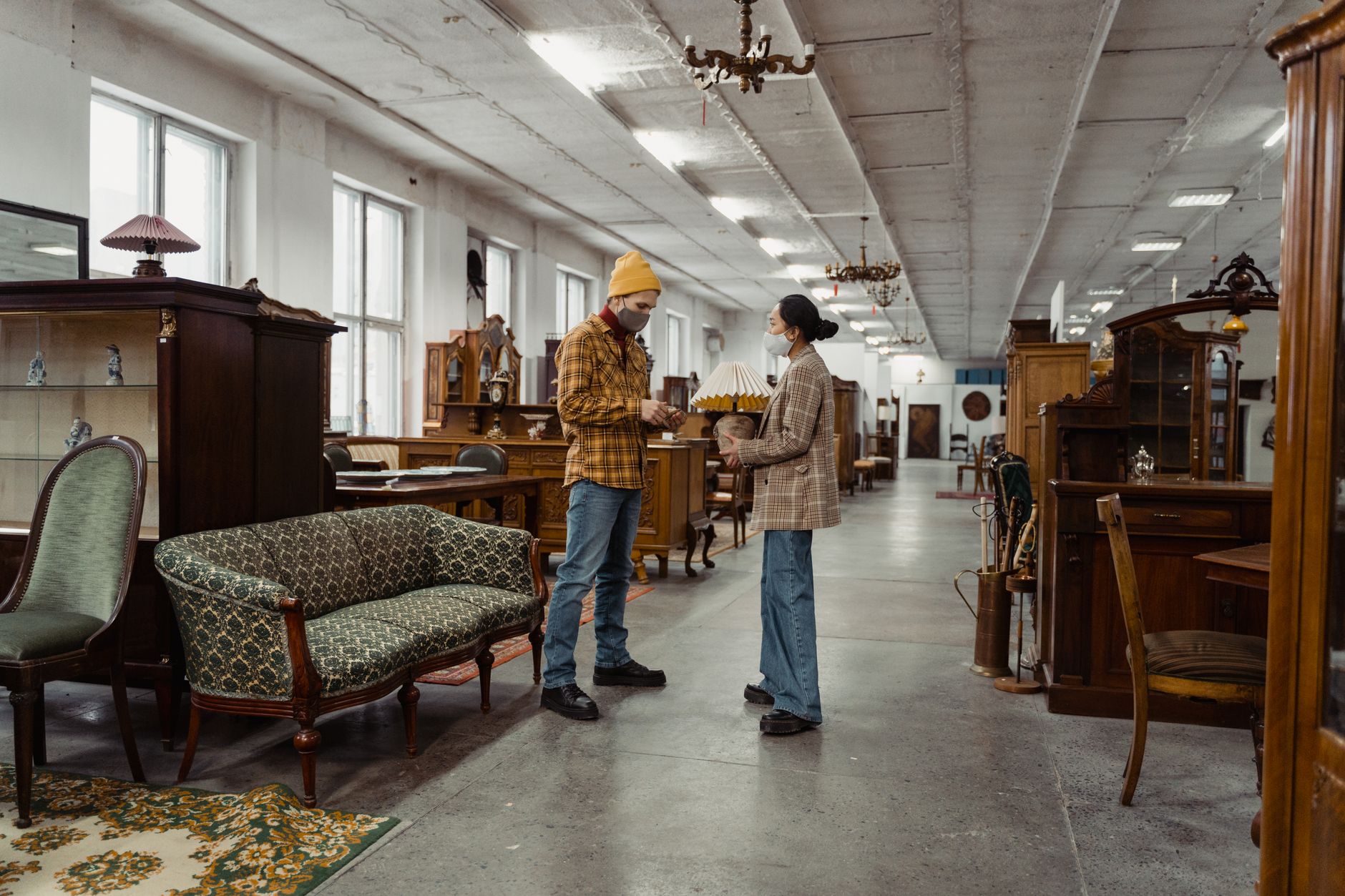
Donating clothes to charity UK shops can resell is a walk-in transaction, since bagged textiles are accepted at any counter during opening hours. Furniture needs a booked van, a fire label check and space in a warehouse that may already be holding sixty sofas awaiting a delivery round.
Preparing Items and Understanding Their Resale Value
Preparation raises acceptance rates sharply. Vacuum upholstery seams, wipe hard surfaces with a mild detergent, and air items for a day before collection to shift storage smells. Photograph the fire label, any maker marks and each face of the item, then attach those images to the booking form.
Value drives what happens next. When you donate furniture to charity UK shops can realistically resell, one sofa can generate £150 of income plus around £37 in Gift Aid, money that goes straight into frontline services rather than administration or storage overheads.
Keep dismantling minimal. Charities prefer wardrobes taken apart because a fully built double rarely clears a stairwell, but ask before unscrewing a table top, since missing bolts turn a saleable piece into scrap. Tape a labelled bag of fixings to the largest panel so nothing is lost in transit.
| Item | Typical resale price | Fire label needed | Collection notes |
|---|---|---|---|
| Two-seater fabric sofa | £80 to £180 | Yes | Measure doorways; corner units often declined |
| Solid wood table and four chairs | £120 to £250 | Only padded seats | Wrap glass tops separately |
| Chest of drawers | £35 to £70 | No | Runners must work; empty every drawer |
| Double divan and mattress | £70 to £140 | Yes | No stains or sagging; bag the mattress |
| Bookcase or wardrobe | £25 to £90 | No | Flat-pack chipboard usually refused |
Furniture Donation as Part of a Wider Local Giving Habit
A furniture donation often starts a broader pattern. People asking how to volunteer at food bank sessions usually begin with a two-hour warehouse shift sorting stock, then move to distribution once trained. Most centres ask for one regular slot rather than occasional help, because rota stability matters far more than raw headcount.
Understanding the UK food bank referral process helps as well. Clients cannot simply turn up; they need a voucher from a GP, school, health visitor, housing officer or Citizens Advice. Furniture projects work the same way, which is why a donated bed frame reaches a household through a caseworker rather than a queue.
Other routes need no referral. The community fridge how it works question has a simple answer: surplus food from shops and households goes into a shared, temperature-monitored fridge that anyone may use, with no means testing, daily date checks and trained volunteers logging every intake.
Local infrastructure sits behind all of it, and the running costs are modest:
- Village hall hire cost UK groups pay averages £10 to £25 per hour, with weekend day rates of £80 to £200, the venue most reuse projects use for pop-up furniture sales.
- Starting a community garden UK style usually means a peppercorn lease from a parish or district council, plus £300 to £800 for tools, raised beds and a water butt.
- Parish council meeting rules UK residents rely on guarantee a public participation slot, agendas published three clear days ahead, and minutes open for inspection.
- Any neighbourhood watch scheme how to start guide begins with six to ten households, one coordinator and free registration before police liaison starts.
- How to become a school governor: apply to the clerk, expect a DBS check, roughly six meetings a year and a four-year term.
- How to run a village fete: budget £400 to £900 for insurance, licences, marquee hire and a first aid presence.
If informal giving grows into something permanent, how to set up a charity becomes the next question. Registration with the Charity Commission is required once annual income passes £5,000 and needs a governing document, at least three unrelated trustees, and objects written for public benefit rather than a closed group.
How do I donate furniture if I live in a top-floor flat with no lift?
Most charity collection teams work in pairs and are insured to carry items down internal stairs, although many cap the effort at three or four floors and will not use external fire escapes. State the floor number and stair type when booking, and mention narrow landings or tight turns. Dismantle bed frames and wardrobes yourself, taping bagged screws to the frame. If a national crew declines on arrival, a smaller local reuse project running a Luton van will often take the identical item, and many housing associations operate an in-house furniture recycling service for tenants that handles awkward access as routine work.
Is it better to donate furniture to charity UK schemes run or sell it privately?
Selling privately returns more cash on desirable pieces, with mid-century sideboards and solid oak tables often fetching £200 to £600 on resale platforms. The trade-off is time: listings, messages, no-shows and arranging access can take several weeks per item. Charity donation is a single booking, a free collection and Gift Aid that adds 25 per cent to the eventual sale value at no cost to you. For ordinary sofas, divans, wardrobes and bookcases, the private resale price after collection hassle rarely justifies the effort, and the item reaches a household furnishing an empty tenancy far faster.
What furniture will UK charities almost always refuse?
Refusals cluster around safety and saleability. Upholstery without a permanent fire label is an automatic no, as are mattresses with stains, tears, sagging or any sign of bed bugs. Charities decline woodworm-affected timber, water-damaged chipboard, garden furniture stored outdoors, cot mattresses, and any item with missing structural components such as a bed slat set or a wardrobe rail. Electrical goods need a valid safety test, so lamps and recliners without one are turned away. Flat-pack units already dismantled twice are usually rejected because the fixing holes no longer hold, leaving an unsafe piece nobody can legally resell.
