

Coastguard Rescue Officer Volunteer UK: How to Join Your Local Team
Becoming a coastguard rescue officer volunteer UK residents rely on is one of the few community roles that mixes cliff rope work, mud rescue and 3am pager calls with ordinary village life. The coastguard rescue officer volunteer UK pathway sits inside HM Coastguard’s Coastal Rescue Service, which operates roughly 300 to 350 Coastguard Rescue Teams and several thousand trained volunteers, from Shetland down to the Isles of Scilly. Unlike a one-off fundraising day, this is a standing commitment: a weekly training night of two to three hours, a rolling 24/7 on-call rota, and a response radius that usually means living or working within ten to fifteen minutes of your team station. This guide covers eligibility, the application timeline, the training modules you must pass, the kit issued to you, the real household cost, and how the role compares with other local volunteering routes.
What a Coastguard Rescue Officer Actually Does
Coastguard Rescue Teams are the shore-based arm of HM Coastguard. When a 999 call reaches the Maritime Rescue Coordination Centre, the duty officer tasks the nearest team by pager. Officers drive to the station, kit up in a 4×4 response vehicle, and work the coastline while lifeboats and helicopters cover the water.
Taskings vary enormously by geography. A Cornish cliff team may run rope rescues for fallen walkers and stranded climbers. An estuary team in Essex or Morecambe Bay spends far more time on mud technician work, using inflatable sledges and water lances to free people trapped to the waist in soft sediment.
Shoreline search is the volume work: missing person searches requested by police, overdue kayakers, dementia patients who have wandered towards the water, and reports of flares or unlit vessels. Teams also handle flood response, ordnance discovery, and safe removal of casualties that the RNLI or air ambulance cannot reach from seaward.
A typical callout profile
Many teams log between 30 and 150 taskings a year, with summer bank holidays and winter storms creating the peaks. Expect a mix of five-minute stand-downs and six-hour searches in horizontal rain. Roughly half of all pages happen outside office hours, which is exactly why employer support and a tolerant household matter as much as fitness.
Eligibility, Fitness and the Application Process
You must be 18 or over, legally resident in the UK, and able to reach your declared station quickly. There is no upper age limit, and teams actively want people who are at home during weekdays, because the hardest rota gaps to fill are Tuesday mornings rather than Saturday nights.
Fitness is functional rather than athletic. You need to carry 20kg of rope kit across broken ground, work a cliff edge in a harness for an hour, and pass an occupational health questionnaire. Vertigo, uncontrolled epilepsy and certain cardiac conditions are barriers; corrected vision, glasses and managed asthma generally are not.
The application itself is straightforward: an online expression of interest, a visit to the team on a training night, a formal application, then interview with the Station Officer and a Coastal Operations Area Commander. Most candidates go from first enquiry to first pager in four to nine months, depending on vacancy numbers and vetting queues.
Checks, references and the medical
Expect a Baseline Personnel Security Standard check, two references, a driving licence check if you want to crew the response vehicle, and a medical. Recruitment often runs in cohorts, so a team with a full establishment may hold your file for a year. Attending the station regularly during that wait genuinely improves your chances.
Training, Kit and What HM Coastguard Provides
Nothing comes out of your pocket. Every officer is issued full personal protective equipment: helmet, drysuit or waterproof shell, boots, gloves, harness, lifejacket, head torch and personal radio. A single officer’s issued kit typically represents £1,500 to £2,500 of equipment, replaced on wear rather than on a fixed schedule.
Core training starts with induction, casualty care, radio procedure, search technique and water awareness. From there you work through practical modules assessed at the station and at regional training centres. Rope rescue and mud technician qualifications take the longest, often 12 to 24 months of steady weekly sessions plus weekend exercises.
Training nights follow a published annual syllabus, so you will repeat core skills every year for currency. Competence is logged individually, and officers who fall behind on attendance lose their operational status until they catch up. That structure is unusually formal compared with most volunteering, and it is the main reason people withdraw.
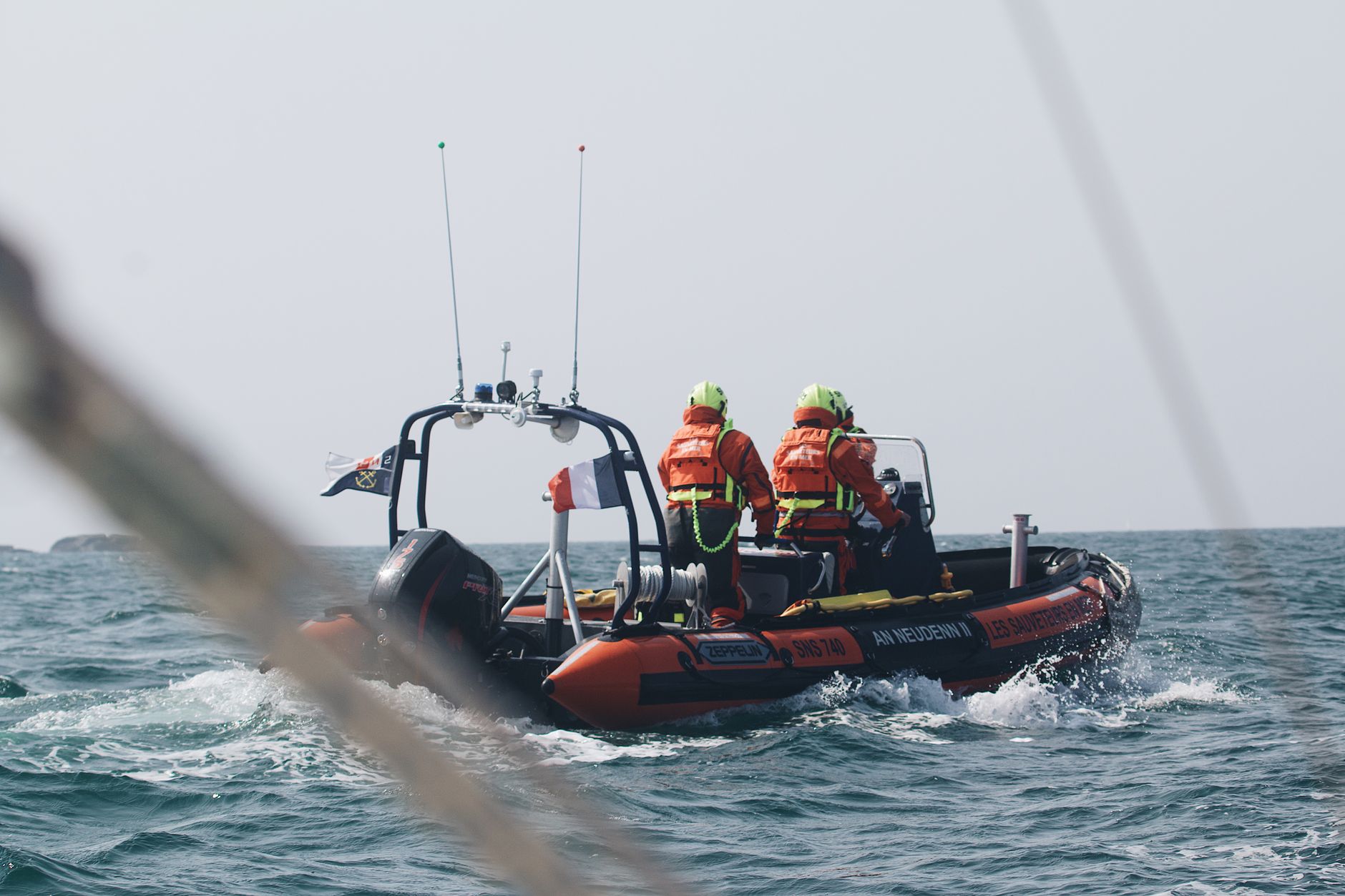
Grades and progression
Progression runs from trainee to Coastguard Rescue Officer, then Deputy Station Officer and Station Officer. Senior roles add rota management, equipment audits, community safety talks in schools, and liaison with local authorities. Several officers also become trainers or mud and rope instructors, travelling to support neighbouring teams across the coastal operations area.
The Real Cost, Time Commitment and Household Impact
The role is not salaried employment. Officers receive reimbursement for mileage and an attendance payment for training and incidents, which typically covers fuel and a share of lost time rather than replacing income. Treat it as cost-neutral volunteering with excellent equipment, not as a second job with a reliable monthly figure.
Time is the genuine currency. Budget roughly 10 to 15 hours a month for training and callouts in a quiet coastal town, and 25 hours or more in a busy tourist area during summer. Add fundraising, open days and community events, because most teams support local causes alongside their operational duties.
Community fundraising is where the role overlaps with everyday village life. Teams run stalls at summer shows, and anyone who has learned how to run a village fete will find the logistics familiar: pitch fees, insurance, raffle licensing and a rain plan. Booking indoor space matters too, since village hall hire cost UK-wide commonly runs £10 to £30 an hour.
| Community role | Typical monthly hours | Out-of-pocket cost | Lead time to start |
|---|---|---|---|
| Coastguard rescue officer | 10-25 hours | £0 (kit issued, mileage paid) | 4-9 months |
| School governor | 4-8 hours | £0-£30 travel | 1-3 months |
| Food bank warehouse volunteer | 4-12 hours | £0-£20 travel | 2-6 weeks |
| Community garden coordinator | 6-20 hours | £50-£300 seeds and tools | 3-12 months |
| Neighbourhood watch coordinator | 2-5 hours | £20-£80 signage and printing | 4-8 weeks |
How It Compares With Other UK Community Volunteering
If a 24/7 pager is unrealistic, the same civic instinct fits plenty of lower-intensity roles. Learning how to volunteer at food bank sessions in your town usually means a single fixed shift a week sorting stock, checking dates and packing parcels, with induction completed in an afternoon rather than a year.
Governance-shaped alternatives suit people who prefer meetings to mud. Understanding how to become a school governor gives you a four-year term and real budget influence, while parish council meeting rules UK-wide guarantee a public participation slot, so you can test the water at a single evening session before standing for election.
Practical, place-based projects sit in the middle. Starting a community garden UK councils will support usually begins with a lease on unused land and a small constituted group, and setting up a community fridge how it works in practice depends on food hygiene registration, a temperature log, and a rota of local businesses donating surplus stock.
Building a wider community portfolio
Many coastguard volunteers stack roles. Some run a neighbourhood watch scheme how to start guidance from their local force describes: a street list, a coordinator, and a police contact. Others focus on retail, comparing the best charity shops in London for donation policy before donating clothes to charity UK branches accept, or research how to set up a charity properly with the Charity Commission.
How Do I Apply to Become a Coastguard Rescue Officer Volunteer in the UK?
Start by identifying your nearest Coastguard Rescue Team, which is usually listed on the HM Coastguard recruitment pages and on local council community directories. Submit an expression of interest online, then attend a training night to see the work first-hand and meet the Station Officer. If both sides are happy, you complete a formal application, provide two references, consent to security vetting and a driving check, and attend a short interview. A health questionnaire and occupational health review follow. Successful candidates are appointed as trainees, issued with kit, and placed on the rota in a supervised capacity while they complete induction, casualty care, radio and search modules. Expect the whole process to take four to nine months, and longer where a team is already at full establishment and waiting for a vacancy.
Is a Coastguard Rescue Officer Volunteer Role Paid Employment?
No. Coastguard Rescue Officers are volunteers, not employees, and there is no salary, pension or guaranteed monthly income attached to the role. What you do receive is full reimbursement of reasonable expenses plus an attendance payment for recognised training sessions and operational incidents, which in practice offsets fuel, parking and some lost earnings. All equipment, uniform, personal protective gear, training courses and insurance are provided at no cost, so the role should not leave you out of pocket. Because payments are linked to attendance rather than hours available, income varies sharply between a quiet inland estuary team and a busy holiday coastline. Anyone relying on the payments to cover household bills has misread the role: treat it as cost-neutral public service with professional-grade training and equipment attached.
What Should I Do If I Live Too Far From a Rescue Team Station?
Response time is a hard operational requirement, so if you cannot reach the station reliably within roughly ten to fifteen minutes, you will not be appointed to that team. Check whether a neighbouring station has vacancies, or whether your workplace sits inside another team’s area, since some officers respond from work rather than home. Beyond that, HM Coastguard runs non-operational support roles, and the RNLI, mountain rescue, lowland search and rescue and community first responder schemes all recruit on similar principles with different geography. Inland, the equivalent civic contribution is often social infrastructure rather than emergency response: understanding the UK food bank referral process through your GP, school or Citizens Advice lets you connect households to help quickly, which prevents crises that emergency services later inherit.
