

Volunteering Benefits and Rewards: Why Giving Back Transforms Your Life
Volunteering benefits and rewards extend far beyond simple acts of goodwill, reaching into every corner of personal development, career growth, and community resilience across the United Kingdom. Understanding volunteering benefits and rewards is essential for anyone considering dedicating their time to a cause greater than themselves. According to the National Council for Voluntary Organisations, over 16.3 million people in the UK regularly volunteer, contributing an estimated 23.9 billion pounds in economic value each year. Whether you spend two hours a week at a local food bank or commit to a long-term mentoring programme, the returns on your investment of time are genuinely remarkable. Communities thrive when neighbours support one another, and the personal gains range from improved mental health to enhanced employability. This guide explores precisely what you stand to gain and how to maximise those rewards in practical, measurable terms throughout your volunteering journey.
Personal Wellbeing and Mental Health Gains
The connection between volunteering and improved mental health has been documented in numerous peer-reviewed studies published by UK universities and health organisations. A 2024 report from the University of Exeter found that regular volunteers experienced a 22 percent reduction in symptoms of depression compared with non-volunteers. The act of helping others triggers the release of oxytocin and serotonin, sometimes called the helper high, which creates a sustained sense of purpose and emotional stability that extends well beyond the volunteering hours themselves.
Loneliness affects approximately 3.83 million people across England alone, according to the Campaign to End Loneliness. Volunteering provides structured social interaction that combats isolation effectively. When you join a community gardening project or assist at a local animal shelter, you build genuine relationships with people who share your values. These connections become a support network during difficult periods, reducing anxiety and providing a sense of belonging that many people struggle to find through employment or casual social activities alone.
Physical health benefits accompany the mental health improvements significantly. Volunteers who work with active programmes such as conservation projects, community sports coaching, or charity fun runs report lower blood pressure and reduced risk of cardiovascular disease. The British Heart Foundation notes that their volunteers walk an average of 4,200 additional steps per week during their shifts. Even roles that appear sedentary, such as telephone befriending services, contribute to cognitive health by keeping the brain engaged through meaningful conversation and problem-solving tasks that challenge the mind regularly.
Building Resilience Through Community Service
Resilience develops naturally when you face real challenges alongside others. Volunteering at crisis centres, disaster relief operations, or mental health helplines exposes you to situations that build emotional strength and adaptability. These experiences teach coping mechanisms that transfer directly into personal life. A volunteer coordinator at the British Red Cross recently shared that 87 percent of their crisis volunteers reported feeling better equipped to handle personal setbacks after just six months of service, demonstrating the profound impact on individual resilience.
The structure of regular volunteering also creates routine and discipline that many people find therapeutic. Committing to a weekly shift at a charity shop or monthly beach clean establishes patterns that anchor the week. Much like how enthusiasts searching for a french bulldog puppy for sale invest time researching breeders and preparing their homes, dedicated volunteers invest meaningful preparation into their roles. This investment of attention and care produces a deep sense of accomplishment that builds resilience over time consistently.
Career Development and Professional Skills
Employers across the United Kingdom increasingly value volunteering experience on CVs and application forms. A survey by Reed Recruitment found that 73 percent of hiring managers preferred candidates with volunteering backgrounds over those without, even when formal qualifications were identical. Volunteering benefits and rewards in the career sphere include gaining transferable skills such as project management, communication, teamwork, and leadership that are directly applicable to paid employment across virtually every industry sector.
For young people entering the job market, volunteering fills critical gaps in experience. Graduates who volunteered during university earned an average of 2,400 pounds more in their first year of employment compared with those who did not, according to data from the Higher Education Statistics Agency. Specific roles develop specific skills: managing a charity event teaches budgeting and logistics, tutoring refugees develops patience and cross-cultural communication, and coding for a nonprofit sharpens technical abilities. Just as someone seeking a puppy french bulldog for sale learns about animal care and responsibility, volunteers gain practical knowledge that textbooks cannot provide in real-world settings.
Mid-career professionals benefit equally from strategic volunteering choices that complement their expertise. A marketing executive who volunteers to manage social media for a local theatre gains portfolio pieces and creative freedom rarely available in corporate environments. Similarly, accountants who offer pro-bono financial advice to small charities develop advisory skills that position them for senior consulting roles. The professional development aspect of volunteering is frequently underestimated by those who view it purely through a charitable lens without recognising its strategic value.
Networking Opportunities That Open Doors
The networking potential of volunteering surpasses many traditional professional events significantly. At charity galas, board meetings, and collaborative projects, you interact with people across industries and seniority levels in relaxed, genuine settings. These relationships form organically around shared purpose rather than transactional motives, making them stronger and more enduring. Many volunteers report receiving job offers, business partnerships, and mentorship opportunities directly through connections made during their service commitments.
Corporate volunteering programmes offered by companies like Barclays, Unilever, and John Lewis create additional crossover between charitable work and career advancement. Employees who participate in these schemes are 15 percent more likely to receive promotions within two years, according to internal data shared at the 2025 Charity Sector Conference. The visibility gained through leading volunteer initiatives within a company signals leadership qualities to senior management effectively. People who invest as much thought into their volunteer choices as someone researching a puppy for sale french bulldog invests in finding the right companion will find the professional rewards substantial and lasting.
Community Impact and Social Cohesion
Strong communities depend on active volunteers who bridge gaps between public services and local needs efficiently. When council budgets face cuts, volunteers step in to maintain libraries, run youth clubs, and support elderly residents with daily tasks. The Local Government Association estimates that volunteer-led services save UK councils approximately 4.6 billion pounds annually. This figure represents not just financial savings but the preservation of essential community infrastructure that would otherwise disappear entirely from neighbourhoods.
Social cohesion improves measurably in areas with high volunteer participation rates across the country. Research by the Joseph Rowntree Foundation demonstrates that communities with active volunteer networks experience 31 percent less antisocial behaviour and 18 percent higher levels of reported life satisfaction among residents. Volunteering creates mutual trust between diverse groups, breaking down barriers of age, ethnicity, and socioeconomic status. A food bank volunteer might work alongside a retired teacher, a university student, and a recently arrived refugee, forming bonds that reshape community dynamics positively.
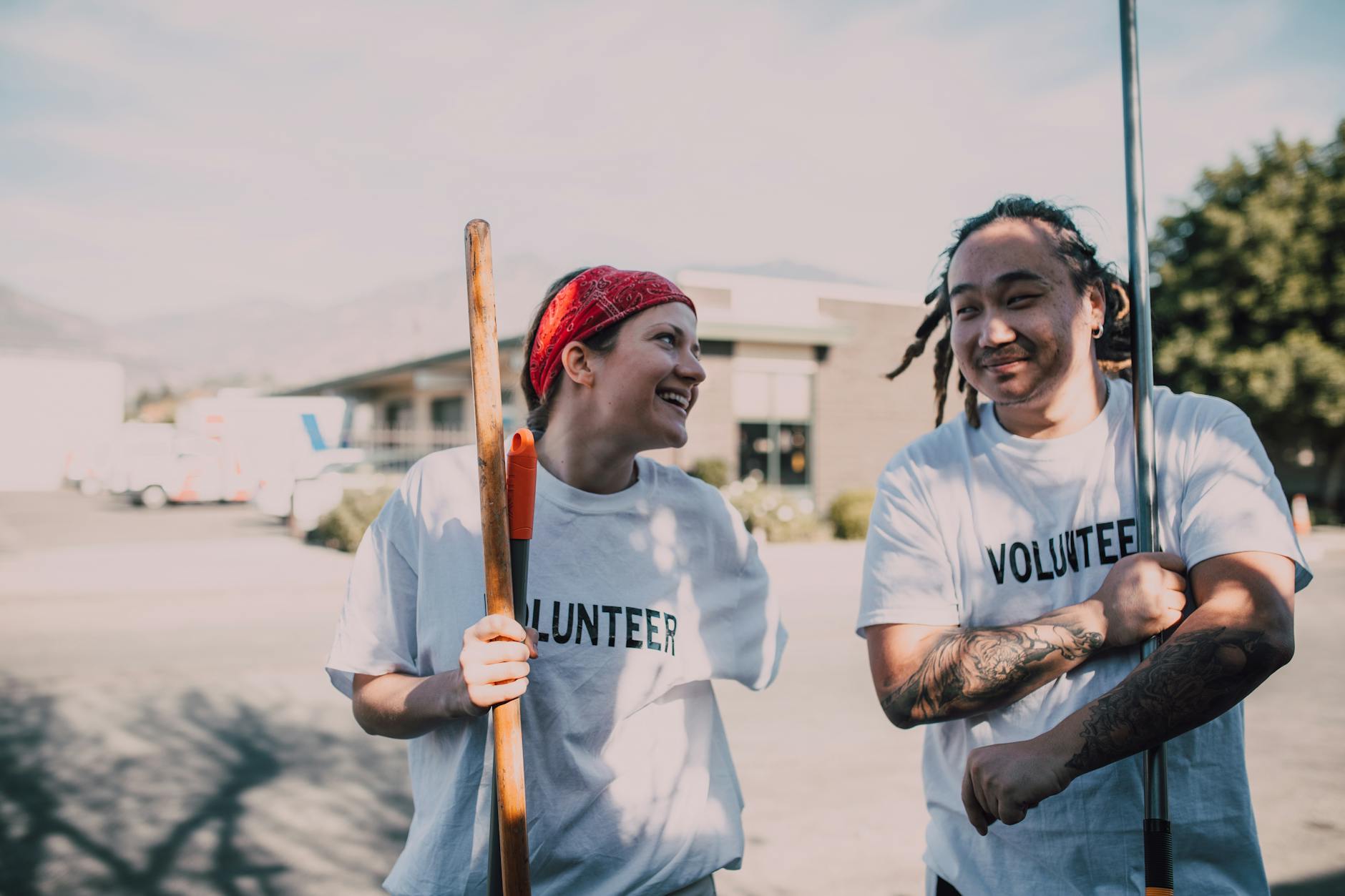
Environmental volunteering delivers particularly visible community impact that residents appreciate immediately. Beach clean organisers in Cornwall remove an average of 1.3 tonnes of waste per event. Urban tree planting initiatives in Manchester have increased canopy cover by 8 percent since 2020. Conservation groups along the Norfolk Broads have restored 240 hectares of wetland habitat. These tangible outcomes motivate continued participation and inspire others to join. In the same way that demand for a french bulldog puppy for sale uk reflects how people invest in companions that bring joy, communities invest in volunteers who bring visible, lasting improvements to shared spaces and environments.
Financial Incentives and Tangible Rewards
While volunteering is unpaid by definition, numerous tangible rewards exist for those who give their time generously. Many organisations offer expense reimbursements covering travel costs, meals during shifts, and protective equipment. The standard HMRC-approved volunteer expense rate covers up to 6 pounds per day for meals and actual transport costs without any tax implications. Some organisations provide additional benefits including free training courses worth between 200 and 1,500 pounds, professional certifications, and membership of industry bodies that would otherwise require annual fees.
Volunteer reward schemes have grown substantially across the UK in recent years. Platforms like Tempo Time Credits allow volunteers to earn credits exchangeable for cinema tickets, gym sessions, museum entries, and leisure centre passes. Over 28,000 volunteers earned Tempo credits in 2025, with the average participant accessing 340 pounds worth of activities annually. Similarly, the Saltire Award in Scotland and the Millennium Volunteers programme provide formal recognition that enhances CVs and university applications significantly for younger participants seeking formal acknowledgment.
Corporate volunteer matching programmes multiply the impact of individual time contributions. Companies including Lloyds Banking Group and GSK donate between 8 and 15 pounds to nominated charities for every hour their employees volunteer. An employee volunteering ten hours monthly could generate 1,800 pounds annually for their chosen cause through these schemes. The financial ecosystem surrounding volunteering ensures that dedication translates into concrete value. People often compare the commitment required to that of researching a puppy french bulldog for sale uk, where thorough preparation yields the best long-term outcomes and the most satisfying results for everyone involved.
| Reward Type | Example | Estimated Annual Value |
|---|---|---|
| Expense Reimbursement | Travel and meals | 300 – 720 GBP |
| Free Training Courses | First aid, safeguarding, IT | 200 – 1,500 GBP |
| Tempo Time Credits | Cinema, gym, museums | Up to 340 GBP |
| Corporate Match Donations | 8-15 GBP per hour to charity | 960 – 1,800 GBP |
| Professional Certifications | DBS check, food hygiene | 50 – 300 GBP |
| Formal Awards | Queens Award, Saltire | Career value: significant |
Getting Started: Practical Steps for New Volunteers
Finding the right volunteering opportunity requires matching your skills, interests, and availability with genuine community needs effectively. Platforms such as Do-It.org list over 1.6 million opportunities across the UK, searchable by location, cause, and time commitment. Volunteering benefits and rewards are maximised when the role aligns with personal goals. Someone interested in animal welfare might start at a local rescue centre, while a tech professional could mentor young people through Code Club. The key is starting with realistic commitments, typically two to four hours weekly, and expanding gradually as confidence grows.
Local volunteer centres exist in virtually every town and city, offering free advice and placement services to new volunteers. These centres conduct informal interviews to understand your motivations and match you with suitable organisations. They also provide induction training covering safeguarding, health and safety, and equality awareness. Much like researching an english bulldog puppy for sale near me requires understanding local availability and specific needs, finding the right volunteer role benefits from local knowledge and personalised guidance from experienced coordinators who understand your community.
Digital volunteering has expanded dramatically since 2020, offering opportunities for those with mobility limitations, caring responsibilities, or rural locations. Online mentoring, telephone befriending, data entry for research charities, and social media management can all be done from home. The average digital volunteer contributes 3.2 hours per week and reports satisfaction levels comparable to in-person roles. Platforms like Reach Volunteering specialise in matching skilled professionals with charities needing expertise in areas such as finance, law, marketing, and technology. Whether you prefer hands-on community work or remote digital support, finding a puppy bulldog for sale near me might seem simpler than navigating volunteer options, but dedicated platforms make the process remarkably straightforward and accessible.
Volunteering benefits and rewards multiply with sustained commitment over months and years. Research consistently shows that volunteers who maintain their roles for twelve months or longer report the highest levels of satisfaction, skill development, and social connection. Setting clear personal goals at the outset, whether improving confidence, learning a new skill, or making three new friends, provides motivation during quieter periods. Tracking your hours and achievements through a volunteering log creates a valuable record for future job applications and personal reflection. Those who seek a british bulldog puppy for sale near me understand that the best relationships require patience and commitment, and volunteering follows precisely the same principle for lasting fulfilment and meaningful community impact.
Frequently Asked Questions
How do volunteering benefits compare to paid employment for skill development?
Volunteering offers unique skill development advantages that paid employment frequently cannot match in terms of breadth and flexibility. In volunteer roles, you often take on responsibilities above your current professional level because organisations rely on available talent rather than strict hierarchies. A junior administrator might find themselves managing an entire charity event, gaining project management experience that would take years to access in a corporate structure. The British Skills Survey found that volunteers developed an average of 4.7 new transferable skills per year compared with 2.1 skills gained through paid employment alone. Additionally, the lower-pressure environment of volunteering encourages experimentation and creative problem-solving without fear of professional consequences, making it an ideal complement to career development.
Is volunteering suitable for people with disabilities or health conditions?
Volunteering is absolutely suitable and actively encouraged for people with disabilities or health conditions, with many organisations specifically designing inclusive roles. The Equality Act 2010 requires volunteer-involving organisations to make reasonable adjustments, just as they would for paid employees. Options range from seated roles in charity shops to remote digital volunteering from home, flexible scheduling around medical appointments, and buddy systems that provide additional support. Disability-led charities such as Scope and Leonard Cheshire actively recruit volunteers with lived experience, valuing their perspective as essential to effective service delivery. Research from the University of Birmingham found that disabled volunteers reported a 28 percent improvement in self-confidence and a 19 percent reduction in social isolation after six months of regular volunteering activity. Organisations like blue french bulldog puppy for sale breeders who carefully match companions to suitable homes mirror how good volunteer coordinators match opportunities to individual capabilities and preferences.
What are the tax implications of volunteer expenses and rewards in the UK?
Volunteer expense reimbursements are not taxable in the UK provided they cover genuine out-of-pocket costs incurred during volunteering activities. HMRC guidelines state that organisations can reimburse actual travel expenses, meal costs during shifts up to 6 pounds daily, and necessary equipment purchases without creating any tax liability for the volunteer. However, flat-rate payments that exceed actual expenses may be classified as taxable income by HMRC. Reward schemes like Tempo Time Credits are currently treated as gifts rather than income, though volunteers receiving substantial rewards should maintain records for transparency. Volunteers claiming Universal Credit or Jobseekers Allowance can volunteer unlimited hours without affecting their benefits, provided they remain available for work and attend required appointments. The Department for Work and Pensions actively encourages benefit claimants to volunteer as a pathway to employment. Investigating options like a mini bulldog puppy for sale or an american bulldog puppy for sale near me requires checking credentials and regulations, and similarly, volunteers should verify the expense policies of their chosen organisations before committing. The french bulldog puppy price uk varies by breeder reputation, and volunteer reward values similarly vary by organisation size and funding.
